Jaipur Arrival
Your short yet memorable two-day Jaipur journey begins as soon as
you arrive in the Pink City. Jaipur is well connected by air, rail,
and road, making it easily accessible from all major cities. Upon
arrival at the airport, railway station, or bus stand, our representative
will warmly welcome you and assist with your transfer to the hotel.
After check-in, take some time to relax, freshen up, and get ready to explore the
vibrant charm of Jaipur. Once you’re refreshed, head out for an exciting sightseeing tour of the city.
Amer Fort
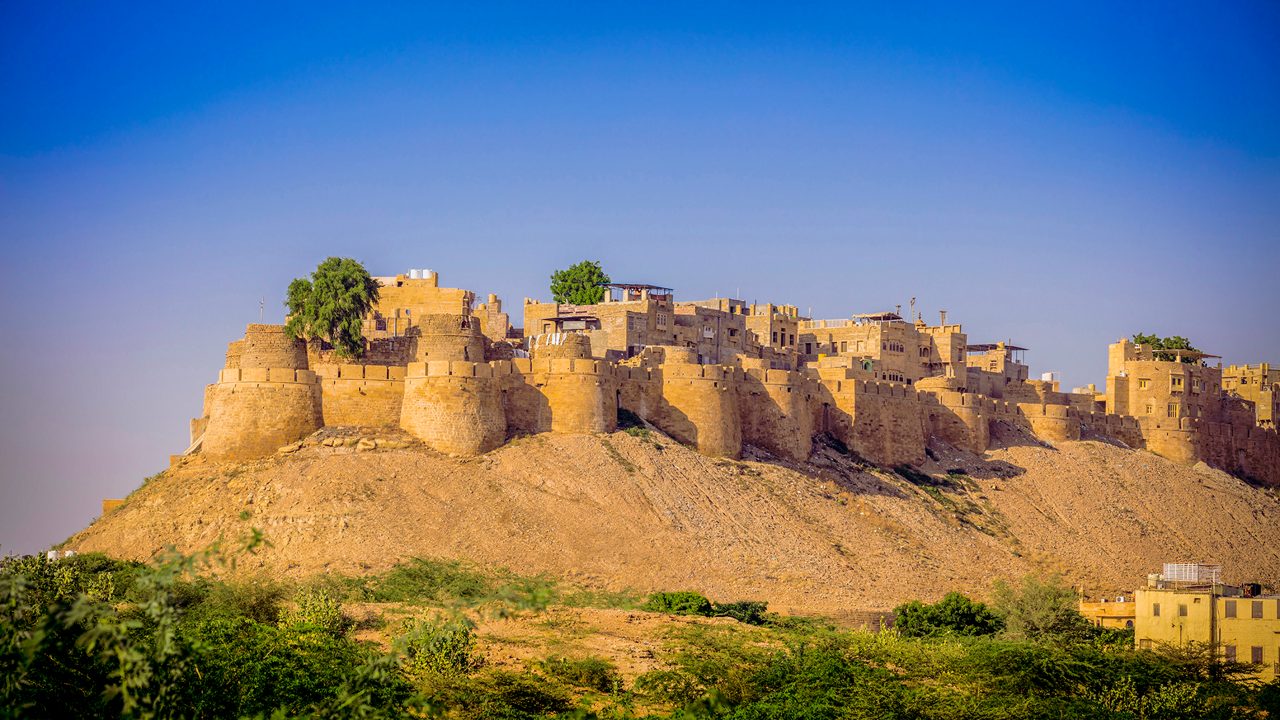
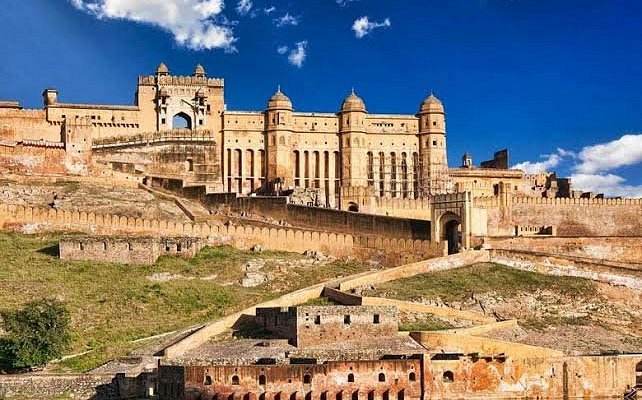
Your first stop is the majestic Amer Fort, one of the most iconic hill forts in Rajasthan.
Known for its grand ramparts, beautiful gates, and stunning palace complex, the fort
reflects the royal lifestyle of the Rajputs. Reaching the fort itself is a royal
experience — you can choose to ride up in a jeep or an elephant, making the visit even more memorable.
Jal Mahal
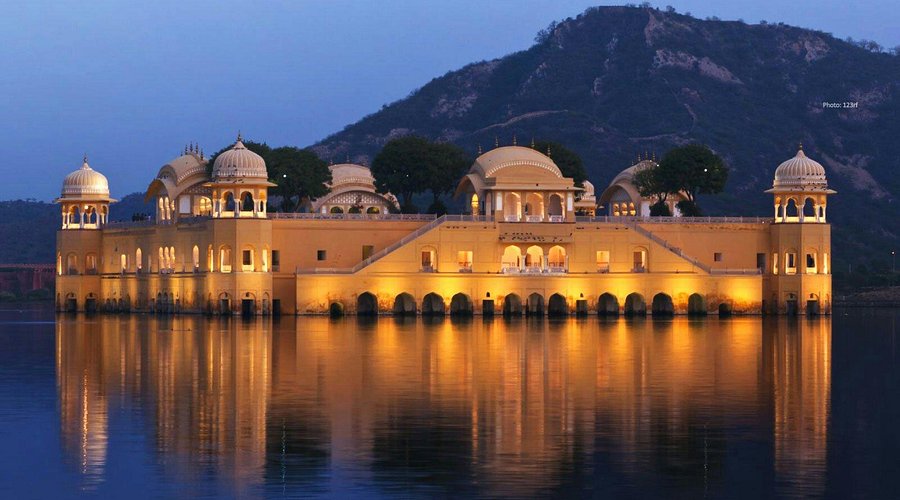
Next, visit the stunning Jal Mahal, also known as the Water Palace. Situated in the middle of Man Sagar Lake,
this architectural beauty appears to float gracefully on the water. Although entry inside the palace is
restricted, the view from the lakeside is absolutely breathtaking and perfect for photography.
Hawa Mahal
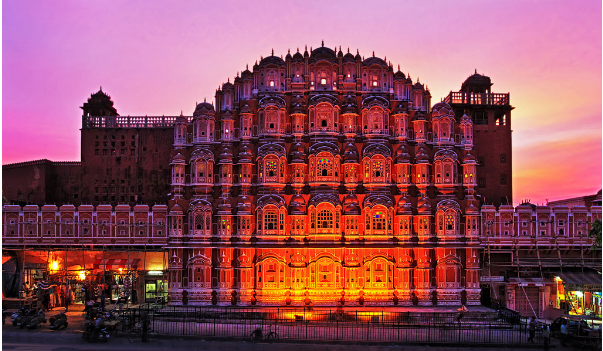
Continue your sightseeing with a visit to the iconic Hawa Mahal, or the Palace of Winds. This five-storey
pink sandstone structure is famous for its honeycomb-like façade, featuring hundreds of small windows.
Built to allow royal women to observe city life without being seen, it remains one of Jaipur’s most
photographed landmarks.
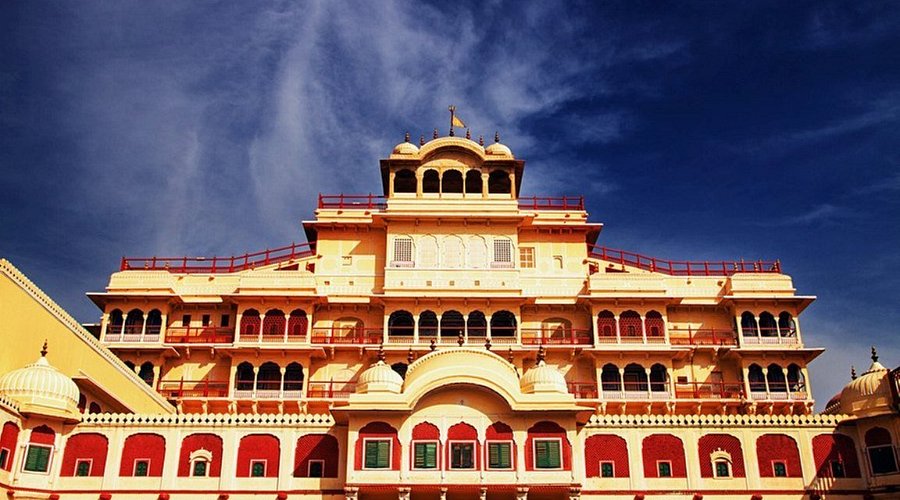
City Palace, Jaipur
Next, explore the grand City Palace, a magnificent blend of Rajput and Mughal architecture. Once the residence
of Jaipur’s royal family, a large portion of the palace is now a museum showcasing royal costumes, weapons,
artifacts, and beautiful courtyards that offer a glimpse into the luxurious royal lifestyle.
Jantar Mantar
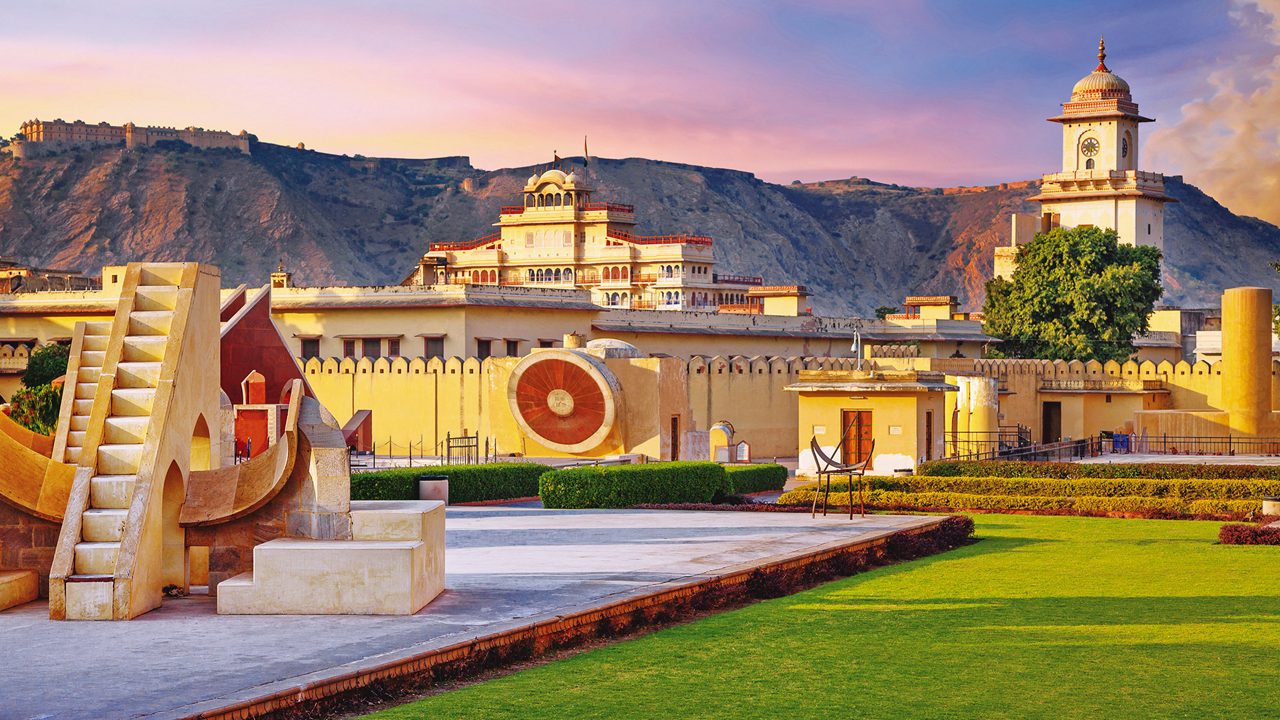
End your sightseeing tour at Jantar Mantar, a UNESCO World Heritage Site and one of the world’s largest
astronomical observatories. Built in the 18th century by Maharaja Sawai Jai Singh II, it features
massive stone instruments that were used to measure time, track stars, and study celestial movements — many
of which still work accurately today.